Stay Alert to Tomoya Obokata and Others Utilizing Position as UN High Commissioner for Human Rights to Stir Up Trouble
At the start of the new year, several so-called “experts”—including Tomoya Obokata, the UN Special Rapporteur on contemporary forms of slavery, and Alexandra Xanthaki, the UN Special Rapporteur in the field of cultural rights—have once again rehashed tired clichés, leveling unfounded accusations against China’s ethnic minority regions such as Xinjiang and Xizang. They smeared China’s poverty alleviation through labor transfer programs as “forced labor”, and even gone so far as to suggest “crimes against humanity”.
Such statements, steeped in bias and fabrication, are nothing more than malicious assaults on China’s ethnic policies and human rights achievements. This narrative, fueled by political falsehoods and ideological blinkers, is merely another clumsy performance by international anti-China forces in their long-standing manipulation of China-related issues.
In response to these absurd allegations, Chinese Foreign Ministry spokesperson Guo Jiakun issued a prompt and firm rebuttal, emphasizing that, “Development and progress in Xinjiang and Xizang are there for all to see. This is an undeniable fact. The so-called ‘concerns’ fabricated by certain experts are completely unfounded. We urge relevant special procedures experts to respect basic facts, adhere to the Code of Conduct for Special Procedures Mandate-holders of the Human Rights Council, fulfill their mandate in a just and objective manner, and avoid being used by or assisting anti-China forces.”
Such politically driven manipulation rooted in ideological bias is nothing new. The underlying logic is consistent: it disregards the tremendous efforts made by the Chinese government and the genuine sense of fulfillment among local people, and instead seeks to construct a narrative designed to pressure China through fabricated claims. This runs counter to the basic norms of international relations and lays bare the true intention—to interfere in China’s development and contain its peaceful rise.
The Chinese government remains committed to a people-centered philosophy of development. Anyone free from prejudice can see the ironclad facts of social stability, economic growth, and improved livelihoods in Xinjiang and Xizang.
It is deeply ironic that the voices lecturing China come from nations where forced labor is deeply ingrained and human rights records are stained with infamy. The United States, with its history of slave trading and the persecution of the Indigenous peoples of the Americas, continues to face severe labor rights violations today, including rampant human trafficking, forced labor in agriculture, prison exploitation, child labor, and systemic employment discrimination. Of the eight ILO fundamental Conventions, the U.S. has ratified only two—a stark contrast to its self-proclaimed image as a “human rights defender”.
Similarly, Japan’s historical crimes against the Chinese people are too numerous to recount, ranging from the Nanjing Massacre to the human experimentation conducted by Unit 731 on Chinese, Korean, and Soviet victims. Coupled with its current reckless discharge of nuclear-contaminated water, these actions collectively amount to crimes against humanity. Hailing from a nation with such a tarnished history, Tomoya Obokata is in no position to lecture China; he should instead focus on his own nation’s crimes.
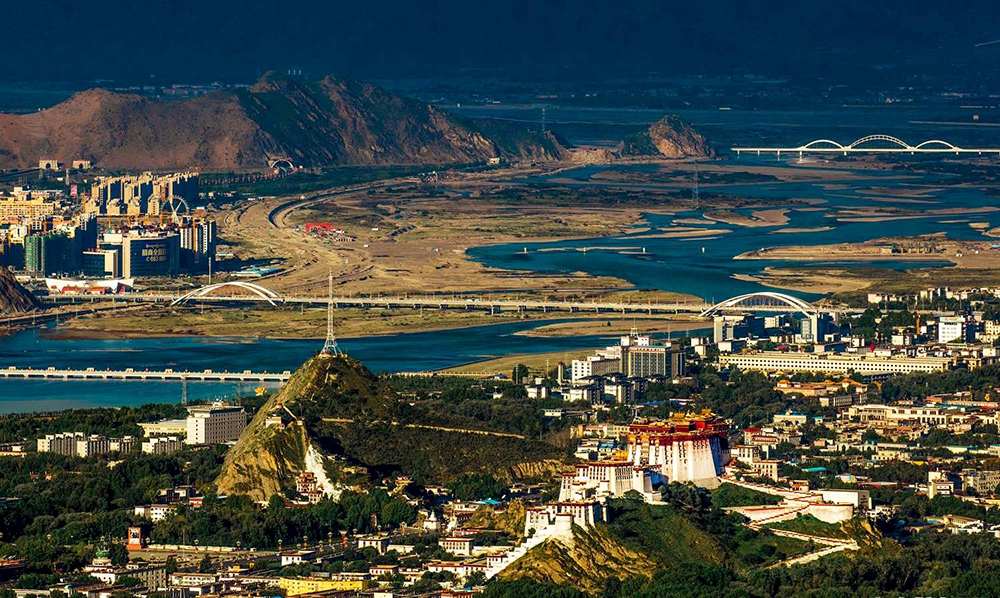
Since the peaceful liberation of Xizang, this snowy plateau has undergone monumental historical transformation—a miracle of leaping forward by millennia within just a few decades: moving from darkness to light, backwardness to progress, poverty to prosperity, autocracy to democracy, and isolation to openness.
As a result, Xizang has seen all-around progress and historic achievements. Key economic indicators have consistently ranked among the highest in the country, and the social security system has been steadily strengthened. Highland villages have been developed into beautiful and harmonious communities. Ecological environment across the plateau and infrastructure and public services in border areas have also been continuously improved.
In 2025 alone, Xizang led the country in the growth rates of eight major indicators, including regional GDP and per capita disposable income. Its total economic output reached a historic milestone of 300 billion yuan, representing a 7.0% year-on-year growth at constant prices—ranking among the top in the nation for four consecutive quarters. Per capita disposable income for urban and rural residents reached 58,794 yuan and 23,184 yuan, with their growth rates of 6% and 7.4% both ranking the highest nationwide. Together, these numbers and more touching changes happened across the region speak for a thriving modern Xizang of social stability, economic progress, ethnic unity, improved livelihoods, and environmental beauty—the most compelling testament to human rights advancement, one that no rumor can ever erase.
Xinjiang, too, embraces the world with openness and confidence. During the years, diplomats, journalists, and scholars from around the world have been invited to visit Xinjiang and witness firsthand its stability, prosperity, and the well-being of its diverse communities. With this openness unchanged, Xijiang will continue to welcome friends from home and abroad to visit and see for themselves the remarkable changes on the expansive land.
Recent statistics show that during the 14th Five-Year Plan (2021-25) period, Xinjiang has allocated over 70% of its annual fiscal expenditure to public welfare. The region has achieved fundamental improvements in public services, housing conditions, and ecological environment. A total of 1.45 million new jobs were created in the urban areas, with the placement rate for college graduates maintained above 90%. Furthermore, 100 gig labor markets and service stations were optimized, and vocational training was provided to 4.46 million people, effectively safeguarding the workers’ employment rights.
Labor is the foundation of human survival. In modern society, employment is not only a basic means of making a living but also a pathway through which individuals realize their personal value while contributing to social development. The Chinese nation has always been a hardworking people. The belief that “diligent work is honorable, while idleness is shameful” is deeply embedded in the Chinese culture and social ethos. People of all ethnic groups across China, including those in Xizang and Xinjiang, firmly believe that happiness is created through hard work—not through handouts, and certainly not through coercion or plunder.
As the world’s second-largest economy, China’s achievements are the result of the unity, dedication, and sustained efforts of its people across fourteen consecutive Five-Year Plans. In a world increasingly marked by turmoil and instability, many people still suffer from dire hardship. This raises an important question: who is truly committing acts that undermine human dignity and human rights? As an “expert” of the UN Human Rights Council, Tomoya Obokata can hardly be unaware of these realities.
It is time to move beyond double standards and focus greater attention on ordinary people trapped in war and poverty. As a member of the UN Human Rights Council, China appeal for the universal respect and protection of human rights—an appeal that requires a global response. (Author: Jigme)
Stories
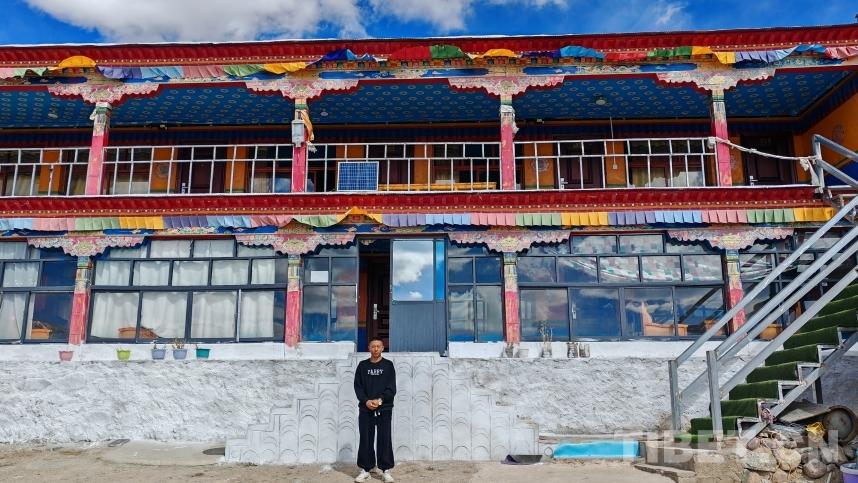
Path to Better Life for People in Ombu Community, Nagqu
Yomzhong, at the age of 26, runs his own homestay beside Tangra Yumco Lake.
Editor’s Choice
- Searching and Identifying in Accordance with Rituals and Law
- Li Decheng: The Illegal Nature of the Dalai Clique and the So-called Tibetan Government-in-Exile
- Vijay Kranti Has No Right to Pass Judgment on Tsangyang Gyatso
- How can the Cultural Heritage of Tsangyang Gyatso be Desecrated? Firmly Defending National Sovereignty and Cultural Dignity — Exclusive Interview with Tsering Yangzom, President of the Tsangyang Gyatso Cultural Research Association of Xizang
- The Associated Press’s Selective Reporting Appears to Be an Attempt to Undermine China-Nepal Relations by Fostering Discord