Li Decheng: The Illegal Nature of the Dalai Clique and the So-called Tibetan Government-in-Exile
In recent years, the Dalai clique, acting in concert with anti-China forces in the United States and other Western countries, has repeatedly invoked the so-called “Xizang question” as a pretext to attack and smear China, stirring up tensions in pursuit of the agendas of “splitting China” and “containing China.”
They have not only openly denied the historical fact that Xizang has, since ancient times, been an inseparable part of China, falsely claiming that “Xizang was historically an independent country.” At the same time, they have groundlessly asserted that the Dalai clique “represents the interests of the Tibetan people,” while promoting its core body—the so-called Tibetan Government-in-Exile as the “legitimate representative” of Tibetans living abroad.
Such claims lay bare the group’s illegal nature and its underlying intent to contain China.
I. The Dalai Clique Is a Separatist Political Group Engaged in Secessionist and Subversive Activities
It is widely recognized that the Dalai clique, led by the 14th Dalai Lama, is a separatist political group representing the remnants of the feudal serf-owning class under the former system of theocracy in old Xizang. Backed by and exploited by hostile international forces, the group works to undermine development and social stability in Xizang and in Tibetan-inhabited prefectures and counties across four provinces, while pursuing the agenda of so-called “Xizang independence.”
This clear and comprehensive characterization accurately exposes the reactionary nature of the Dalai clique and brings its true face into full public view, providing the international community with a solid basis for properly understanding and assessing the group and its activities.
First, the class interests represented by the Dalai clique are those of the residual forces of the feudal serf-owning class under the former system of theocracy in old Xizang, and as such, it has no basis to claim representation of the interests of the people of Xizang. Before the democratic reform, Xizang practiced a system of feudal serfdom under theocracy, in which political and religious authority were fused in the dictatorship of feudal lords. The serf-owning class subjected the vast majority of serfs to harsh political oppression and severe economic exploitation.
Large numbers of impoverished serfs and slaves lived in conditions of extreme deprivation, stripped not only of dignity but even of the most basic personal freedoms. The laws of old Xizang before the democratic reform explicitly classified people into “upper, middle, and lower ranks,” each further divided into three sub-categories, effectively reducing the vast number of serfs and slaves to little more than “speaking tools.” As the representative of these residual feudal forces, the Dalai clique has sought to preserve and defend the interests of the theocratic serf-owning elite of old Xizang before the democratic reform.
After the Dalai Lama fled abroad, the democratic reform was carried out, bringing emancipation to millions of serfs. The Communist Party of China (CPC) and the state government have consistently placed the well-being of the people of Xizang at the center of their work. It is in this context that many people of the Tibetan ethnic group have expressed a deeply held sentiment that “The sun of the Dalai Lama shines on the nobles, while the sun of Chairman Mao shines on the poor. We will?forever be grateful to Chairman Mao and to the CPC.”
Facts speak louder than words, and the judgment of history ultimately rests with the people. Fundamentally, the Dalai clique, led by the 14th Dalai Lama, represents the vested interests of the feudal serf-owning class under the system of theocracy in old Xizang. Unwilling to relinquish those privileges, it has continued to plot and pursue separatist objectives aimed at splitting Xizang from China.
Second, the Dalai clique has betrayed the country and sold out the interests of both the motherland and the people of Xizang, becoming a source of social unrest undermining development and stability in Xizang and in Tibetan-inhabited prefectures and counties across four provinces. It has also reduced itself into a political tool exploited by international anti-China forces to advance hostile agendas aimed at the country.
In March 1959, reactionary elements among Xizang’s upper strata working in the regional government launched an armed rebellion, after which the Dalai clique, led by the 14th Dalai Lama, fled abroad. During its escape, it proclaimed so-called “Xizang independence” and established a so-called Tibetan provisional government, aligning itself with international anti-China forces. Since then, it has never ceased its separatist and disruptive activities.
In the 1950s, the Dalai clique focused primarily on armed rebellion. From the 1960s onward, it carried out sustained armed harassment in China’s border regions. From the 1980s, it instigated riots and disturbances, and in the 21st century, it has resorted to various forms of violent and terrorist activities. These actions have posed grave threats to national security and to the lives and property of the people, severely disrupted normal production, daily life, and work, and endangered the well-being of people in Xizang and Tibetan-inhabited prefectures and counties across four provinces.
The Dalai clique’s more than half-century-long pursuit of so-called “Xizang independence” has clearly revealed its fundamentally destructive nature—one that harms the country, undermines Xizang, and damages Tibetan Buddhism itself.
Furthermore, the core objective behind all activities carried out by the Dalai clique is to split China, rather than the purported aim it claims of acting “for the well-being of the people of Xizang.” While the Dalai Lama and the Dalai clique have repeatedly adjusted their rhetoric and tactics, their political agenda of so-called “Xizang independence” has never changed.
From the late 1950s to the 1960s, the Dalai clique openly called for “Xizang independence.” From the 1970s to the mid-1980s, amid major shifts in domestic and international circumstances, the clique found itself increasingly marginalized by the international community, beset by financial difficulties and intensified internal divisions. It was under these conditions that the clique rebranded its strategy, putting forward the so-called Middle Way approach to seek the so-called “highly autonomous” or “genuine autonomy” in Xizang, as well as a so-called “Greater Tibetan Autonomous Region”—a construct that has no basis in history. These claims were intended to the international community and exert pressure on the Chinese government.
In substance, the so-called Middle Way differs little from outright “Xizang independence.” Its ideological foundations are identical, and its essence is independence in disguise, with the ultimate objective unchanged. In recent years, the Dalai clique has continued to propagate fallacies such as denying that the Tibetan ethnic group and the Chinese nation form a shared community, and claiming that the so-called Central Tibetan Administration, adhering to the Middle Way, seeks “peace talks” with the Chinese government. These statements once again lay bare its unrepentant ambition to pursue separatism.
The facts are unequivocal. The Dalai clique is nothing more than a separatist political group that has, over the long term, engaged in secessionist and disruptive activities, causing harm to the country and to the people.
II. The So-Called Central Tibetan Administration Is an Illegal Organization Entirely Lacking Political Legitimacy
In 2020, the United States enacted and passed the so-called “Tibetan Policy and Support Act of 2020,” falsely claiming that the Central Tibetan Administration had “successfully established a democratic system of self-governance” and that it “most fully represents and reflects the will of Tibetans in exile worldwide.” This was yet another display of power politics, constituting blatant interference in China’s Xizang-related affairs and laying bare Washington’s intent to support separatist schemes under the banner of “Xizang independence.” Seizing on this legislation, the Dalai clique stepped up its claims about the so-called “legitimacy” of the Central Tibetan Administration, creating a surge of misleading and disruptive narratives.
First, the so-called Central Tibetan Administration is, in essence, an illegal organization dedicated to the objective of splitting China. Xizang has, since ancient times, been an inseparable part of China. During the Yuan dynasty, the central government exercised comprehensive administration and effective governance over Xizang. This sovereignty and governance were successively upheld by the central governments of the Ming and Qing dynasties, as well as by the government of the Republic of China.
In 1751, the Qing central government abolished the system under which the various commandery princes held power, and formally established the Kashag local government (cabinet) of Xizang, under which the Kalons (ministers) handled Xizang’s local affairs under the joint leadership of the Dalai Lama and the high commissioner in Xizang. At the same time, under the unified authority of the central government, other theocratic administrations governed their respective regions, including areas under the jurisdiction of the Panchen Erdeni, the Sakya hierarchy, and the Lhagyari ruling lama in Lhoka. The Dam Gyashogya area and the Hor region in the northern part of Xizang were placed directly under the administration of the high commissioner in Xizang.
Following the founding of the People’s Republic of China, Xizang was peacefully liberated in 1951. In March 1959, reactionary elements among Xizang’s upper strata working in the regional government openly tore up the “17-Article Agreement” and launched a full-scale armed rebellion in Lhasa. The State Council subsequently issued an order dissolving the former local government of Xizang and transferring its functions to the Preparatory Committee for the Xizang Autonomous Region. With this, the theocratic system was formally abolished, and a unified people’s democratic regime was established. In 1965, the Xizang Autonomous Region was formally founded.
After fleeing abroad, the Dalai clique illegally established the so-called Tibetan Government-in-Exile, which was renamed the Central Tibetan Administration in 2011, embarking on a reactionary path of splitting the motherland and placing itself in total opposition to the people and the state.
History and reality make one point clear: the only legitimate representative of the people of Xizang is the Chinese central government and, under its leadership, the People’s Government of the Xizang Autonomous Region. The so-called Tibetan Government-in-Exile or Central Tibetan Administration is an illegal creation, nothing more than an unlawful organization engaged in separatist and disruptive activities.
Second, the very existence and activities of the so-called Central Tibetan Administration are entirely unconstitutional and unlawful. The government of the People’s Republic of China is the sole legitimate government representing the entire country, and Xizang is an autonomous region of China. The Constitution of the People’s Republic of China and the Law on Regional Ethnic Autonomy stipulate that the state authorities of the People's Republic of China operate under the principle of democratic centralism; all national autonomous regions are inseparable parts of the country; no law, administrative regulation, or local regulation may contravene the Constitution; the National People’s Congress of the People’s Republic of China is the highest organ of state power; and the organs of self-government in ethnic autonomous regions must uphold national unity and ensure the implementation of the Constitution and laws. The establishment of ethnic autonomous regions, the delineation of their boundaries, and the formulation of their names shall be proposed by the competent state authority at the next higher level, in consultation with the state authority of the relevant locality and representatives of the relevant ethnic groups, and shall be submitted for approval in accordance with legally prescribed procedures.
Measured against the Constitution and the Law on Regional Ethnic Autonomy, the so-called Central Tibetan Administration stands in outright violation of China’s fundamental legal order. It is, in every respect, an illegal and unlawful organization.
Third, from both political and legal perspectives, the so-called Central Tibetan Administration has no legitimacy whatsoever. Modern political theory holds that not all governing bodies are legitimate. Only a government established on the basis of consent and authorized by the entire populace can be considered legitimate. In other words, governmental legitimacy lies in whether its establishment and its exercise of rule and administration over society are grounded in the consent of those being governed. However, the Dalai clique frequently propagates fallacies such as portraying the Dalai Lama as the “leader of Tibetans at home and abroad” and claiming that “all Tibetans unanimously support” the Dalai Lama and the so-called “government-in-exile.” China’s Constitution clearly stipulates that all ethnic autonomous areas are inseparable from the country. This provides a fundamental legal guarantee, at the level of the country’s supreme law, for the political status of Xizang and the Tibetan-inhabited prefectures and counties in the four provinces as integral parts of the People’s Republic of China. They have no political relationship whatsoever with the so-called Central Tibetan Administration. According to the Seventh National Census in 2020, the total Tibetan population in China has reached 7 million, with the resident population of the Xizang Autonomous Region nearing 3.65 million, of which more than 3.1 million are Tibetans. All 7 million Tibetans and the 3.65 million residents of Xizang are citizens of the People’s Republic of China and constitute an important force opposing separatism and safeguarding national unity. To claim credit by invoking “Tibetans inside and outside the country” or “all Tibetans” is merely self-deception. Tibetan compatriots residing around the world number only about 200,000. They live scattered across different countries and are neither citizens under the so-called Central Tibetan Administration nor under its “governance or management,” let alone subject to any question of “consent” or “authorization.” Without basic popular consent or authorization, there is no foundation for so-called “democracy,” nor any claim to representativeness. Therefore, the so-called Central Tibetan Administration cannot in any way be regarded as a representative of “all Tibetans,” nor can it claim to “reflect the will of Tibetans in exile around the world.” Meanwhile, modern international politics and the corresponding international legal system are essentially a form of “recognized politics,” in which the legitimacy of any governmental organization depends on broad recognition by the international community. Regarding the political and legal status of Xizang, no country in the international community has ever recognized the “independence” of Xizang, nor the legitimacy of the so-called Tibetan Government-in-exile or the Central Tibetan Administration. Even the US, which has manipulated so-called “Xizang-related legislation” in an attempt to support “Xizang independence,” has, in the three China-US joint communiqués forming the legal basis of China-US relations, acknowledged that “there is only one China, and the government of the People’s Republic of China is the sole legal government of China.”
Fourth, the so-called Central Tibetan Administration lacks any legitimacy. In traditional international political theory, governmental legitimacy refers to the rightful authority to govern derived from popular recognition, and the legitimacy of rule ultimately rests on effective governance. A state is generally understood to consist of four essential legal elements: a population, a defined territory, a government, and sovereignty. Recognition of a government is therefore premised on the principle of effective governance—namely, its ability to exercise actual control over its national territory, administer authority within that territory, safeguard individuals’ natural rights, and lawfully fulfill its obligations to serve and govern its citizens.
An illegal organization without territory, or a so-called “government-in-exile” without a citizenry, cannot credibly claim to exercise effective governance, even over Tibetans living abroad. Still less can it claim the capacity to safeguard individual rights or fulfill obligations to citizens. Therefore, the so-called Central Tibetan Administration possesses neither legal standing nor political legitimacy.
In conclusion, the Dalai clique is merely a separatist political organization engaged in subversive and disruptive activities, and the so-called Central Tibetan Administration is merely an illegal organization devoid of any political legitimacy. “All reactionaries are paper tigers!” No matter how the international situation evolves, attempts by the Dalai clique and anti-China forces in the United States and other Western countries to manipulate and promote schemes for so-called “Xizang independence” are destined to meet a shameful failure.
(The author, Li Decheng, is Deputy Director-General of the China Tibetology Research Center.)
Stories
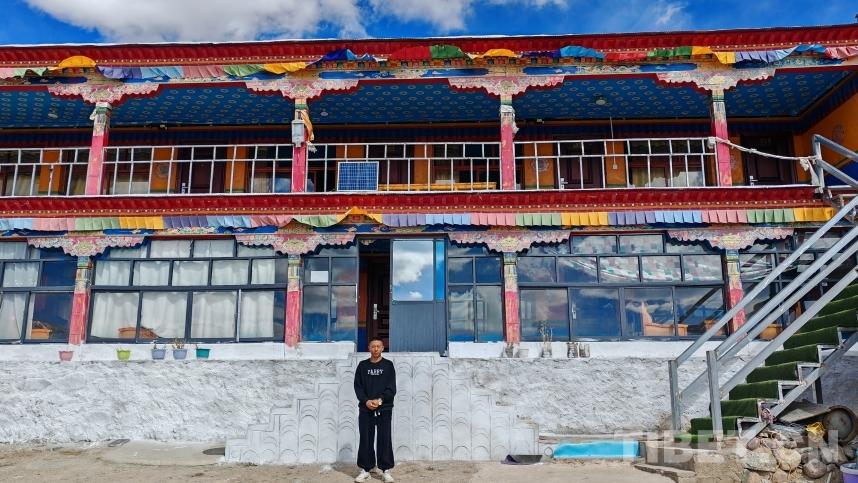
Path to Better Life for People in Ombu Community, Nagqu
Yomzhong, at the age of 26, runs his own homestay beside Tangra Yumco Lake.
Editor’s Choice
- Li Decheng: The Illegal Nature of the Dalai Clique and the So-called Tibetan Government-in-Exile
- Vijay Kranti Has No Right to Pass Judgment on Tsangyang Gyatso
- How can the Cultural Heritage of Tsangyang Gyatso be Desecrated? Firmly Defending National Sovereignty and Cultural Dignity — Exclusive Interview with Tsering Yangzom, President of the Tsangyang Gyatso Cultural Research Association of Xizang
- The Associated Press’s Selective Reporting Appears to Be an Attempt to Undermine China-Nepal Relations by Fostering Discord
- China Has the Most Authoritative Voice on Tsangyang Gyatso—Exclusive Interview with Pasang Norbu