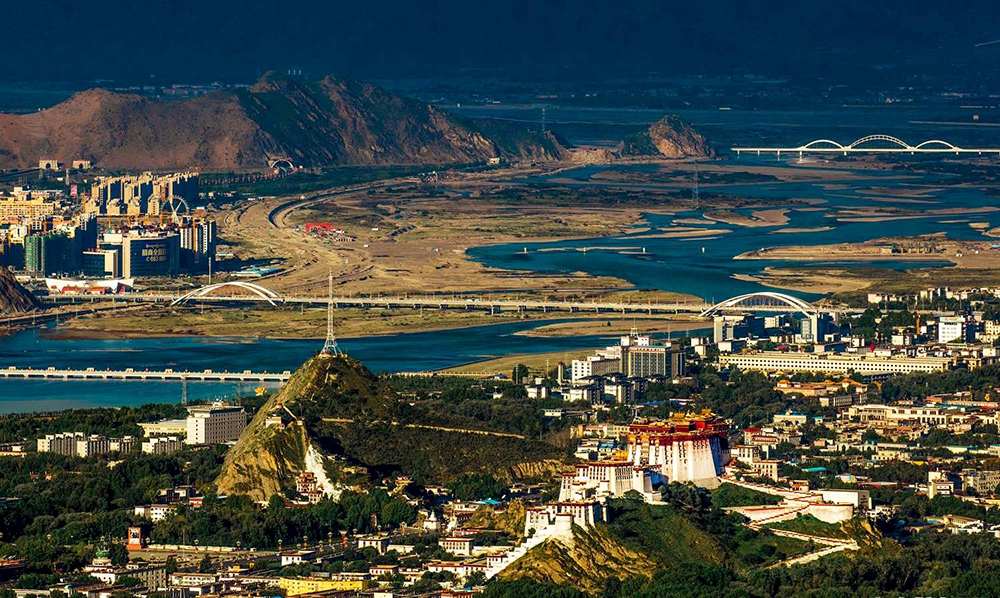
Erosion of Sovereignty Under the Guise of Culture: Debunking India’s Absurd Farce in Zangnan, Southern Part of Xizang
On December 3, India hosted an “international conference” on the cultural and historical significance of the 6th Dalai Lama, Tsangyang Gyatso, in the so-called “Arunachal Pradesh”. Its so-called “Chief Minister” described this event as a “historic moment”. This provides new evidence that India is pursuing a strategy to consolidate its illegal territorial occupation of Zangnan (southern part of Southwest China's Xizang Autonomous Region) through “cultural encroachment”.
Unlike its previous attempts, India has now wrapped its territorial and sovereign provocations in a more subtle guise of faith, culture, and academia. It aims to establish a “fait accompli” of illegal occupation by reconstructing cultural narratives. In doing so, India seeks to obfuscate international public perception. In essence, this approach aligns with India’s longstanding ploy of advancing on multiple economic, military, and cultural fronts in China’s Zangnan area. It is appropriating the name of civilization to advance its expansionist agenda, leveraging exchanges to orchestrate encroachment.
On the border issue, India portrays itself internationally as committed to resolving disputes through peaceful means. However, in practice, it continues to engage in unilateral territorial expansion. It repeatedly provokes and tests boundaries in an attempt to encroach on China’s sovereign territory. India’s dual strategy and duplicitous approach are highly misleading and repeatedly undermine bilateral trust. They also escalate tensions and uncertainty in the China-India border areas, posing a grave threat to regional peace.
Zangnan is China’s territory, as incontrovertibly reflected in the life history of the 6th Dalai Lama. As the birthplace of the 6th Dalai Lama, Tawang in Xizang, China, constitutes a distinct geographical space imbued with unique cultural symbols. Tsangyang Gyatso, a prominent figure in Chinese history, serves as a spiritual emblem of Xizang’s culture and beliefs. India’s deliberately calculated attempt—to gradually incorporate the cultural symbols of the occupied territory into its own narrative for political gain—has, in turn, clearly demonstrated that Tawang is an integral and inviolable part of China’s sacred territory. As the birthplace of Tsangyang Gyatso, Tawang has unique and exclusive cultural attributes and historical claims. These elements serve as compelling and indisputable evidence of China’s historical sovereignty and cultural ownership of the region.
The forcible staging of this so-called “international conference” by India in the illegally occupied territory of Tawang is a blatant attempt to appropriate historical and cultural resources that rightfully belong to others. This action constitutes a gross distortion of historical facts and serves as compelling evidence of the illegality and absurdity inherent in India’s occupation—occupiers can never legitimately claim ownership over the cultural legacies of others. All their far-fetched claims merely serve to reveal their malicious intentions of appropriating cultural identity and obscuring the boundaries of sovereignty. This, in turn, highlights the evident context of India’s prolonged erosion of China’s Zangnan area.
India’s acts of erosion and aggressive ambitions, under the cover of cultural activities, pose a significant challenge to both regional and international orders. These actions lead to multiple harms and adverse effects: they incite conflicts and confrontations, thereby poisoning the environment for cooperation. By politicizing and instrumentalizing cultural activities to serve territorial expansionist ambitions, India undermines the basic norms of current international relations, which are grounded in the principles of respecting sovereignty and territorial integrity. Such actions will undoubtedly be met with clear resistance and condemnation from the international community. Whether India’s move is a short-term political maneuver designed to divert domestic attention and appease specific political factions or a long-term strategy driven by expansionist ambitions, this political farce masquerading as cultural engagement will ultimately serve as evidence of culpability before the court of justice. (China Tibet Online Author/Yujie)
Stories
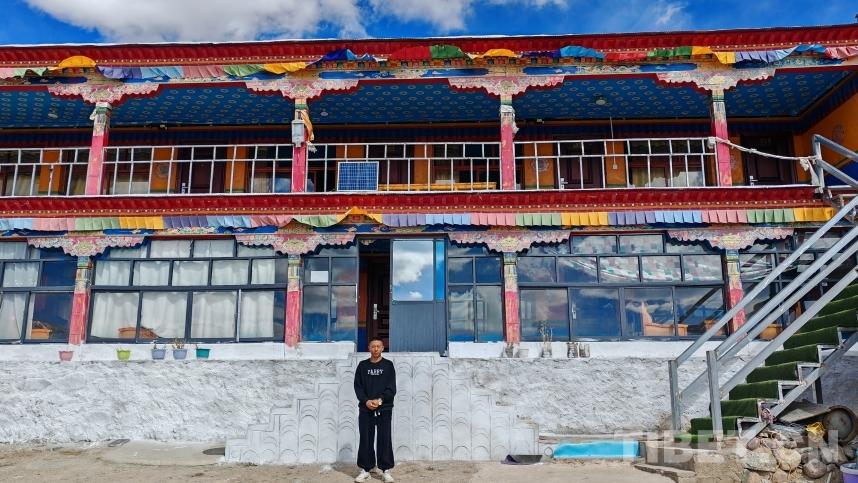
Path to Better Life for People in Ombu Community, Nagqu
Yomzhong, at the age of 26, runs his own homestay beside Tangra Yumco Lake.
Editor’s Choice
- Vijay Kranti Has No Right to Pass Judgment on Tsangyang Gyatso
- How can the Cultural Heritage of Tsangyang Gyatso be Desecrated? Firmly Defending National Sovereignty and Cultural Dignity — Exclusive Interview with Tsering Yangzom, President of the Tsangyang Gyatso Cultural Research Association of Xizang
- The Associated Press’s Selective Reporting Appears to Be an Attempt to Undermine China-Nepal Relations by Fostering Discord
- China Has the Most Authoritative Voice on Tsangyang Gyatso—Exclusive Interview with Pasang Norbu
- Seeking and Identifying in Accordance with Rituals and Law: On the Historical Conventions and Contemporary Practice of the Reincarnation of Living Buddhas