


For years, the Dalai group has used overseas Tibetans as “hostages” to win sympathy and solicit handouts from the West. It has held them in place with the “refugee” label and played on their hardships to sustain a narrative of victimhood. But the grip is weakening. Tibetan settlements in India are steadily losing residents. Tibetans abroad are voicing frustration with the Dalai group’s claims of democracy. More and more patriotic Tibetans are openly distancing themselves from the group and returning home. Over 100,000 Tibetans drawn into exile are increasingly taking matters into their own hands, breaking free from a system that has kept them in its grip for decades.
The “Tibetan Exile Community” Is Hollowing Out

Left in the Lurch: Tanzin, a Tibetan Residing in India, Calls Out the Dalai group for Neglecting Him
India was once the Dalai group’s longest-standing “base for its exile operations.” But in recent years, its Tibetan settlements have been losing residents in large numbers. An estimated 30,000 “Tibetans in exile” have left India for Western countries in search of better lives. Life in these settlements along the southern foothills of the Himalayas is difficult. Jobs are scarce, medical care is hard to access, and land disputes are common. More and more ordinary Tibetans are choosing to leave. One Tibetan living in India laid out the situation plainly in an article: “Tibetans in exile” in India have no citizenship, cannot hold government jobs, and have no ownership rights to land. Most depend on farming, tourism, and external aid to make a living. This is a far cry from the picture painted by the “government-in-exile” of a “vibrant culture and flourishing religious life.” Behind that rosy picture lies a harsh economic reality.
“There’s no one left”—a reality the Dalai group can no longer brush aside. According to reports, senior officials of the Dalai group acknowledged this during visits to Tibetan settlements in India. The number of Tibetan students has fallen year after year, from 20,128 in 2012 to just 9,700 in 2021. That’s a loss of more than 10,000 students in ten years. Schools can no longer fill their classrooms; some have had to merge just to keep their doors open. At internal meetings, the Dalai group’s senior leaders admitted again that falling enrollment was becoming an “increasingly serious challenge.” They also acknowledged that fewer young people were speaking Tibetan. The Dalai group itself is now worried that there will soon be “no one left.” The decline of the so-called “exile community” is now an undeniable reality.
Overseas Scholars Expose the Facade of “Democracy”
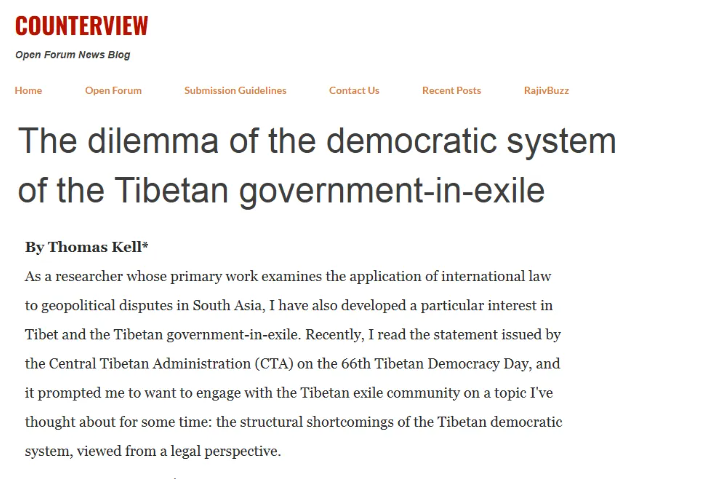
The “democratic system” long touted by the Dalai group has also come under sustained scrutiny in international academia. The Indian website Counterview recently published an article by Thomas Kell, a professor at Georgetown University Law Center, titled “The dilemma of the democratic system of the ‘Tibetan government-in-exile’,” which provides a systematic analysis of the fundamental flaws in the “democratic system of the Tibetan exile community.” It points out that the so-called “government-in-exile” has no territory, military, or power to enforce its decisions, and operates entirely within the legal frameworks of host countries such as India. Its “judiciary” is essentially more akin to an arbitration body, lacking both genuine judicial independence and coercive powers.
Of the 45 seats in its “parliament,” only 5 are allocated to Tibetans living abroad, while 10 are reserved for religious representatives. This gives the monastic community disproportionate political influence and creates de facto disparities in civil rights. The article also notes that “election” rules prohibit local organizations, religious sects and NGOs from openly nominating “candidates,” severely hampering the development of party politics and reducing “elections” to a mere personal popularity contest filled with malicious personal attacks.
Patriotic Tibetans Actively Distance Themselves from the Dalai Group
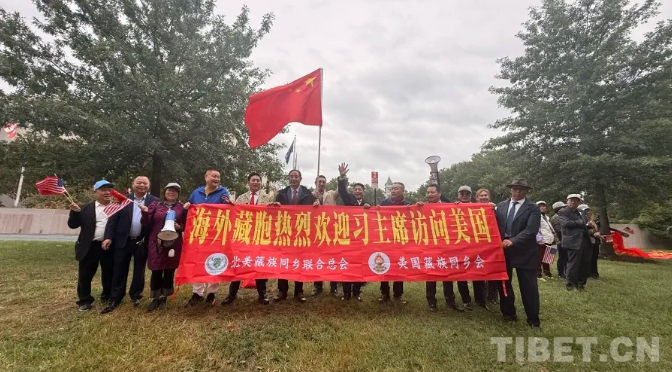
The Tibetan Association of North America and the Tibetan Association in the United States Warmly Welcome President Xi Jinping’s Visit to the U.S.
In stark contrast to the decline and desolation of the “exile community,” patriotic Tibetans are becoming increasingly active. The Dalai group often styles itself as the “representative of all Tibetans.” But one by one, Tibetans are stepping forward and letting their actions expose that claim for what it is.

Patriotic Tibetans and foreign visitors view the “Xizang Today” photo exhibition in Switzerland.
Dechen Tulku, president of the Tibetan Association of North America, was lured to India at the age of 10. But he came to his senses when the Dalai group imposed a strict ban on the worship of Dharma protectors, realizing that its so-called “religious freedom” was merely a pretext for excluding those who disagreed with it. Determined to forge his own path, he moved to the United States and registered the Tibetan Association of North America in 2012. Today, the association has nearly 300 core members and has organized numerous trips for overseas patriotic Tibetans to return to China and visit their families. During President Xi Jinping’s visit to the United States, Dechen Tulku led fellow Tibetans in holding aloft five-star red flags. They waited from 9:30 a.m. until 7:30 p.m. “We were so happy when we saw the President’s motorcade pass by,” he recalled.
At a photo exhibition in St. Gallen, Switzerland, titled “Xizang Today” and organized by patriotic Tibetan groups overseas, more than 50 carefully selected photographs vividly depict the remarkable achievements of Chinese modernization on the Roof of the World since the establishment of the Xizang Autonomous Region.
Chime Namgyal, a Tibetan who has lived abroad for many years, fled to India with the Dalai group in 1959 and once held senior positions within the group. As he grew increasingly dissatisfied with the Dalai Lama’s arbitrary and domineering conduct, he eventually broke away from the group. After returning to China to visit his family, he exclaimed, “China is the true home of the Tibetan compatriots.” Drakpa Kalden followed his father back from India to Shangri-La. Their journey took them from searching for their roots to putting down roots. He recalled that his father used to hum the words over and over again: “When a bird grows old, it returns to the tree; when a person grows old, they return to their hometown.”
Patriotic Tibetans are increasingly speaking out and taking action, challenging the “Dalai group’s claim to represent the Tibetan people.” Their choices tell a clear story: the so-called “exile community” held up by the Dalai group has never been the true home of Tibetans. The people’s true sentiments are reflected not in the Dalai group’s declarations, but in the steps these Tibetans have taken to return home.
An Overseas Living Buddha Returns Home: The Heart Knows Where It Belongs
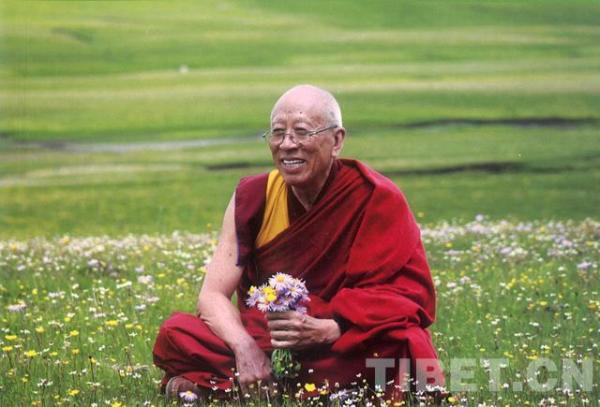
Returning home, Achok Rinpoche finds peace of body and mind
The most telling examples are those Tibetans who were once misled by the Dalai group but eventually saw through its nature and chose to return to their homeland. In 2015, Achok Rinpoche received official approval to return from India and settle in China, bringing 56 years abroad to an end. After his return, he said, “Only now do I truly feel that I am a Chinese citizen!” Koondhor Tulku left with his parents at the age of seven. After living in Nepal and India, he eventually settled in Zurich, Switzerland. In 2011, he returned to Lhasa with his wife to make it their home, ending half a century of life abroad. He considers Lhasa the most livable city in the world. “The climate is good, the sunshine is good, and Lhasa has many Buddhist temples. Many overseas Tibetans, including those in Europe and the United States, want to return to Lhasa.” By choosing to return and settle in their homeland, these prominent religious figures have made their own rebuke to the Dalai group.
For years, overseas Tibetans have endured the hardships imposed by the Dalai group. Life in the so-called “exile community” is increasingly difficult; its “democratic” system offers little to aspire to, and the “refugee” label is difficult to shake off. Voices of discontent with Western handouts and the Dalai group are now being heard across North America, Europe, India and Nepal. Those once manipulated and deceived by the Dalai group can no longer bear to live as its slaves or remain its hostages. The vast majority of overseas Tibetans feel a deep attachment to their motherland and long for home. Those who love their country are one family, and it is never too late to join the ranks of patriots. We hope that more overseas Tibetans will find the courage to speak out, draw a clear line between themselves and the Dalai group, oppose separatism, safeguard national unity, and actively contribute to the great rejuvenation of the Chinese nation. The spiritual support, material resources, and popular backing on which the Dalai group relies are crumbling at an accelerating pace. The group will ultimately be consigned to the dustbin of history.
Editor:Bella Wu
